NAC is not a legal supplement yet — the FDA has proposed to make it one
A November 2026 proposed rule would let NAC be sold as a dietary supplement, 63 years after the FDA approved it as a drug. Comments close January 19, 2027.
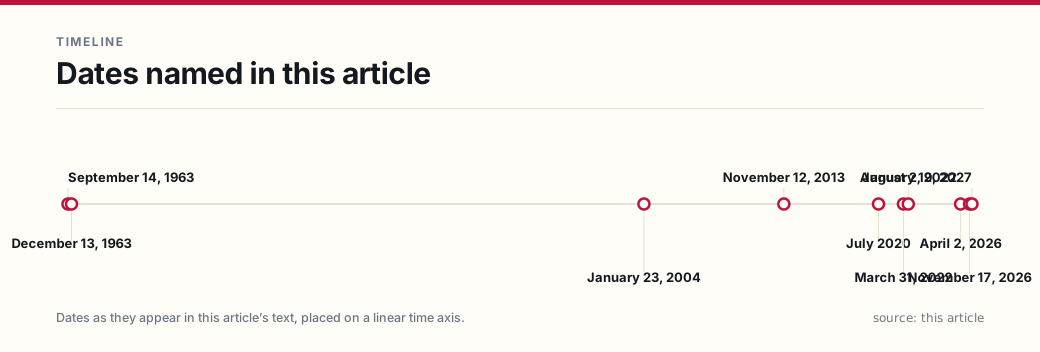
On November 17, 2026 the Food and Drug Administration published a proposed rule that would do something the agency has never done: use a power Congress wrote into the dietary supplement definition in 1994 to lift an exclusion from an ingredient. The ingredient is N-acetyl-L-cysteine, sold for decades as NAC.
If the rule is finalized, NAC-containing products could be lawfully marketed as dietary supplements — provided they meet the rest of the definition and do not otherwise violate the Federal Food, Drug, and Cosmetic Act. That is a change in legal status, not a change on the shelf: nothing is reformulated, approved or recalled on the day the proposal publishes, and the comment window runs to January 19, 2027.
In short: the FDA’s proposal (Docket No. FDA-2025-N-2699, 91 Fed. Reg. 73717) would add NAC to a new list at 21 CFR 190.1 of ingredients that are not excluded from the dietary supplement definition, 63 years after approving NAC as a drug; nothing a shopper can buy changes until a final rule takes effect.
This is federal food and drug law, and it applies nationwide. It says nothing about state rules on retail sale, and it does not license any product. Every date below is a date in the rule or in the agency’s own announcement.
What the proposal actually does
The mechanism is small and easy to misread, so it is worth setting out in full. The rule would amend 21 CFR part 190, which is headed “Dietary Supplements,” by adding a new Subpart A with a single section, Sec. 190.1, headed “Dietary ingredients not excluded from the dietary supplement definition.” The operative sentence reads:
“The following ingredients, which would otherwise be excluded from the dietary supplement definition, are not excluded for use in or as a dietary supplement under section 201(ff)(3)(B) of the Federal Food, Drug, and Cosmetic Act (the Act) and the addition of such ingredients to a dietary supplement is not a prohibited act under section 301(ll) of the Act”
Two paragraphs follow: “(a) N-acetyl-L-cysteine” and “(b) [Reserved].” Paragraph (b) is the part that matters beyond NAC. The FDA has built a list rather than written a one-off exemption, and says the same reasoning would apply to other articles caught by the same clause. NAC is first; the slot for a second is open.
Two legal effects come with the listing:
- The exclusion stops applying. A product containing NAC that otherwise meets the definition would be a dietary supplement, not an unapproved drug sold under sufferance.
- Adding it to a supplement stops being a separate prohibited act. Section 301(ll) of the Act bars putting an approved drug into a food; the rule states that adding NAC to a dietary supplement is not a prohibited act under that clause either.
And one timing detail that will matter if the rule survives comment: the FDA proposes that any final rule “become effective immediately upon publication,” citing 5 U.S.C. 553(d)(1), the provision that lets a rule that relieves a restriction skip the usual 30-day delay. There is no compliance period to plan around, because there is nothing to comply with — the rule removes a bar rather than imposing a duty.
| If the rule is finalized | Today | |
|---|---|---|
| Legal status of an NAC supplement | A dietary supplement under 201(ff) | Excluded by 201(ff)(3)(B)(i); sold under enforcement discretion |
| FDA premarket review of the product | None | None |
| Good manufacturing practice (21 CFR part 111) | Applies | Applies to products within the discretion policy |
| Structure/function claims | Allowed with the required disclaimer statement | Same, for products within the policy |
| Claims to treat or prevent disease | Prohibited | Prohibited |
| The drug products | Unaffected | Unaffected |
Why NAC needed a rule at all
The clause that caught NAC is section 201(ff)(3)(B)(i): a product loses supplement status if it contains an article that was approved as a new drug before that article was marketed as a supplement or as a food. NAC was approved on September 14, 1963, under NDA 013601, as Mucomyst (acetylcysteine), for oral inhalation — notice of the approval ran at 28 Fed. Reg. 13509 on December 13, 1963.
The agency’s account of what followed is unusually complete, and it explains why this took so long:
- The 1963 application was withdrawn in 2009 at the sponsor’s request, for reasons other than safety or effectiveness (78 Fed. Reg. 67365, November 12, 2013). Withdrawal did not undo the approval for the purpose of the exclusion clause, because the clause turns on the fact of approval preceding supplement marketing.
- Acetylcysteine was separately approved as an injectable under NDA 021539 (Acetadote) on January 23, 2004, as an antidote for acetaminophen overdose. As of April 2, 2026 the Orange Book listed 19 abbreviated applications for the ingredient.
- The FDA restated its position repeatedly: in a 2001 response to a health-claim petition, in a 2010 response to a new-dietary-ingredient notification for NAC ethyl ester, and in July 2020 warning letters to companies selling unapproved hangover products that were labeled as supplements.
- Two citizen petitions in 2021 asked the agency to change course. On March 31, 2022 it denied one outright and the other in part, while saying it had not yet decided on the request for rulemaking. On August 2, 2022 it published a guidance announcing temporary enforcement discretion for certain NAC products labeled as supplements (87 Fed. Reg. 47220) — the arrangement the market has run on since.
That last point is the one readers most often get wrong. Enforcement discretion is a statement about enforcement priorities, not a legal status: the agency’s position, stated in that 2010 notification response, is that under the exclusion clause NAC-containing products “cannot be dietary supplements,” and the 2022 guidance announced only that it would not act against a defined set of them while it decided whether to write a rule. The 2026 proposal is that rule. If it is finalized, the FDA says it intends to withdraw the 2022 guidance.
What the safety review found — and what it did not
Before using the authority, the agency had to satisfy itself on two things: that the ingredient can be regulated as a supplement safely, and that lifting the exclusion would not undercut drug development. Both are in the document, and the second is the reason the analysis is longer than the safety section.
On safety, the FDA ran a systematic review of studies of orally ingested NAC, with the protocol and conclusions externally peer-reviewed. It used 41 studies of high confidence, covering doses from 200 mg to 9,000 mg per day and durations from 5 days to 3 years, and concluded a “minimal” level of concern on the National Toxicology Program’s five-point scale. Reported adverse events were mostly gastrointestinal — pain or discomfort, nausea, vomiting, and rash — with one study showing a statistically significant increase in nausea. The agency compared the doses studied with the servings printed on products sold as supplements, which cluster at 600, 1,000 and 1,200 mg per day, and found enough overlap to treat the study conclusions as relevant to the products.
Three limits on that finding are worth stating, because the headline version drops them:
- It is a risk assessment, not a benefit finding. The FDA assessed adverse events. It did not conclude that NAC does anything. The Office of Dietary Supplements is blunt about the general rule: the FDA “does not determine whether dietary supplements are effective before they are marketed.”
- “Minimal concern” is a category, not a guarantee. It reflects what the reviewed studies reported at those doses. It is not a statement about any particular product, any particular person, or any combination with a prescription medicine.
- The comparison is to labeled servings. A product that prints 1,200 mg and delivers something else is a manufacturing problem, which is what the good-manufacturing-practice rules exist for and which the rule does not relax.
On drug development, the agency’s reasoning is that NAC has been sold both ways for more than 30 years without starving the drug side: 19 abbreviated applications for the ingredient, and 832 clinical trials studying NAC as a drug. It also notes that supplement servings overlap the doses used in those trials rather than sitting above them.
The economic case is as small as a rule gets. The FDA estimates annualized costs of roughly $99 at a 3 percent discount rate and $121 at 7 percent, over ten years — almost entirely the cost to firms of reading the rule — and states that it did not estimate benefits. It classifies the action as deregulatory under Executive Order 14192.
What does not change
The most useful thing to understand about this proposal is how narrow it is. Everything that makes supplements a lighter-touch category than drugs stays exactly where it is:
- No approval, no efficacy review. Supplements are not approved before sale, and this rule does not introduce approval for NAC.
- Claims are still constrained. Structure/function claims remain permitted with the required statement that the product “is not intended to diagnose, treat, cure, or prevent any disease.” Claims to treat disease remain prohibited.
- Manufacturing rules still apply. A supplement that does not meet 21 CFR part 111 may still face enforcement, and the rule says so explicitly.
- Adulteration and misbranding are still violations. The rule removes one categorical bar; it does not create a safe harbour for a product that is contaminated, mislabeled or short on the amount it declares.
- The approved drug products are untouched. Inhaled and injectable acetylcysteine remain approved prescription drug products. A capsule of NAC is not a substitute for either.
If you already take NAC
The rule changes none of the following, and all of it is checkable on the package in front of you:
- Read the Supplement Facts panel, not the front of the bottle. Servings of 600, 1,000 and 1,200 mg are the common ones, and the panel is where the actual amount per serving is declared. How that panel is laid out, and what each line means, is set out here.
- Add up the ingredient across products. NAC appears in liver, respiratory and “hangover” blends as well as standalone capsules, and the same ingredient under two names — “N-acetyl-L-cysteine” and “acetylcysteine” — is still one ingredient. The duplicate-ingredient trap is set out here.
- Expect the side effects to be gastrointestinal, not hepatic. The adverse events the FDA compiled were gastrointestinal and skin-related: nausea, abdominal discomfort, vomiting, rash.
- Tell your prescriber and pharmacist what you take, particularly if you are pregnant or nursing, are scheduled for surgery, or take prescription medicines. The Office of Dietary Supplements’ caution is general and applies here: supplements can interact with medicines, and “natural” is not a safety claim.
- Report a reaction. The FDA takes reports at 800-FDA-1088 and through the Safety Reporting Portal, and a report is more useful with the product label in hand.
What you can do before January 19, 2027
There is exactly one action with a deadline, and it is optional.
Comment on the rule, if you have something the agency asked for. The docket is FDA-2025-N-2699 on regulations.gov, and the window closes at 11:59 p.m. Eastern on January 19, 2027. The FDA named the questions it wants answered: whether NAC was in fact marketed as a dietary supplement or a food before September 14, 1963 (it says it is aware of no such evidence and asks for any), whether the rule would affect drug development, whether an immediate effective date is right, and whether its cost estimates hold. A comment that supplies evidence on one of those is worth more than a comment that registers an opinion.
Buy nothing, and register nothing. No product becomes legal because someone sells you a certificate, and no ingredient moves onto a list because a fee was paid. The rule is published in the Federal Register and the docket is free. Anyone offering to “register” an NAC product, to “reserve” its status, or to sell a compliance package ahead of a final rule is selling something the FDA does not issue — the same pattern that surrounds every supplement rulemaking, and the reason we keep a scam-spotting checklist for pages that imitate federal sites.
If you are simply a shopper: nothing about today’s shelves changes, and nothing about the label changes either. The rule would make the market legal, not the products better. What it might eventually change is how freely NAC is formulated into combination products, since firms would no longer be building on an excluded ingredient — and the FDA says it cannot predict whether that happens.
The dates that decide this
| Date | What happened, or happens |
|---|---|
| September 14, 1963 | FDA approves NAC as a new drug, NDA 013601 (Mucomyst, oral inhalation) |
| 2009 | That application is withdrawn at the sponsor’s request, for reasons other than safety or effectiveness |
| July 2020 | Warning letters restate that NAC products are excluded from the supplement definition |
| March 31, 2022 | Both citizen petitions are denied, one outright and one in part; the agency says it is considering rulemaking |
| August 2, 2022 | Enforcement-discretion guidance published (87 Fed. Reg. 47220) |
| November 17, 2026 | Proposed rule published (91 Fed. Reg. 73717); comment period opens |
| January 19, 2027 | Comments close |
| Undated — after comment | A final rule, if one issues; on the agency’s proposal it would take effect when published and the 2022 guidance would be withdrawn |
The proposal is a proposal. Between now and any final rule, the operative document for a buyer is still the 2022 guidance, and the operative document for a label is still the panel on the package.
The primary sources behind this piece, and the rest of the library’s, are collected in the network’s official government resources directory.
This article is educational content for general information only and is not professional advice. It is not medical advice and does not diagnose, treat or replace advice from a clinician or pharmacist. Whether any supplement is right for you is a question for your own health care team.
Frequently asked questions
- Is NAC legal to sell as a dietary supplement right now?
- Not lawfully — it is tolerated. The FDA's position, stated repeatedly over the past 25 years, is that NAC is excluded from the dietary supplement definition under section 201(ff)(3)(B)(i) of the Federal Food, Drug, and Cosmetic Act, because it was approved as a drug in 1963 before it was marketed as a supplement. Since August 2022 the agency has exercised temporary enforcement discretion over certain NAC products labeled as supplements; that is a decision not to enforce, not a legal status. The November 2026 proposal would change the status if it is finalized.
- When does the change take effect?
- Not on the proposal's publication date. The proposed rule was published November 17, 2026; comments close January 19, 2027; and the FDA proposes that any final rule become effective on the day it is published, relying on 5 U.S.C. 553(d)(1). Until a final rule is published, the 2022 enforcement discretion policy applies, and the agency says it intends to keep applying it while the rulemaking runs.
- Does this mean NAC supplements are FDA approved?
- No, and the distinction matters. Approval is a drug concept. Dietary supplements are not approved by the FDA before they are marketed, the agency does not determine whether they are effective, and NAC would not be an exception. What the rule would do is remove a categorical exclusion so that a product meeting the definition can be sold lawfully as a supplement and regulated as one — with the good-manufacturing-practice rules in 21 CFR part 111 and the same limits on claims as any other supplement.
- Is NAC safe at the doses sold in supplements?
- The FDA reviewed 41 high-confidence studies of orally ingested NAC, at doses from 200 mg to 9,000 mg per day and for durations from 5 days to 3 years, and concluded a 'minimal' level of concern on the National Toxicology Program's five-point scale. The reported adverse events were mostly gastrointestinal — pain or discomfort, nausea, vomiting and rash — with one study showing a statistically significant increase in nausea. Common supplement servings of 600, 1,000 and 1,200 mg per day sit inside the studied range. That is the agency's safety conclusion for the purposes of this rule, not medical advice for any individual.
- Should I stop taking NAC, or start?
- That is a question for a clinician or pharmacist, not for a rule. Nothing in the proposal changes what is on the shelf or how it is labeled, so the practical checks are the ones that already apply: read the Supplement Facts panel for the actual amount per serving, do not stack products that contain the same ingredient, and tell your prescriber about everything you take. The FDA-approved acetylcysteine products — an inhaled form and an injectable antidote for acetaminophen overdose — are approved prescription drug products and are not substitutes for a supplement.
- Can I comment on the rule, and does it cost anything?
- Anyone can comment, free, through the federal docket at regulations.gov, Docket No. FDA-2025-N-2699, until 11:59 p.m. Eastern on January 19, 2027. The agency asked specifically for evidence that NAC was marketed as a supplement or a food before September 14, 1963, and for comment on its view that the rule will not affect drug development, on the immediate effective date, and on its cost estimates. No product, seller or service needs to be bought or registered to take part, and no one can make an ingredient legal by charging a fee.
Sources
Each source is a primary or official reference, checked before publication. Links open the original.
- Federal Register, Vol. 91, No. 220 (November 17, 2026) — Food and Drug Administration proposed rule, 'Rulemaking To Provide That N-acetyl-L-cysteine Is Not Excluded From the Dietary Supplement Definition,' 91 Fed. Reg. 73717-73726 (FR Doc. 2026-23351; Docket No. FDA-2025-N-2699; RIN 0910-AI91; 21 CFR Part 190): comments due January 19, 2027; would add Subpart A and Sec. 190.1, listing '(a) N-acetyl-L-cysteine' and reserving '(b)' for later ingredients; states this is the first use of the rulemaking authority in section 201(ff)(3)(B) of the FD&C Act; finds NAC not excluded and that its addition to a supplement is not a prohibited act under section 301(ll); proposes an effective date on publication of any final rule under 5 U.S.C. 553(d)(1); states the agency intends to withdraw the 2022 enforcement-discretion guidance if the rule is finalized; signed by the Secretary of Health and Human Services (federalregister.gov/documents/2026/11/17/2026-23351/rulemaking-to-provide-that-n-acetyl-l-cysteine-is-not-excluded-from-the-dietary-supplement retrieved November 17, 2026)
- U.S. Food and Drug Administration — constituent update, 'FDA Issues Proposed Rule on NAC Products as Dietary Supplements,' November 16, 2026: NAC-containing products 'cannot be dietary supplements' under the agency's reading of the exclusion provision; the rule would be the FDA's 'first use of our rulemaking authority described in the exclusion provision'; 'The FDA intends to continue this enforcement discretion while we work through the rulemaking process'; 'The FDA undertook a comprehensive review and did not identify any safety concerns with the use of NAC in or as a dietary supplement'; the action would be deregulatory under Executive Order 14192; 60-day comment period (fda.gov/food/hfp-constituent-updates/fda-issues-proposed-rule-nac-products-dietary-supplements retrieved November 17, 2026)
- Federal Register, Vol. 87, No. 148 (August 2, 2022) — Food and Drug Administration notice of availability, 'Policy Regarding N-acetyl-L-cysteine; Guidance for Industry' (FR Doc. 2022-16499), 87 Fed. Reg. 47220: the enforcement-discretion guidance that the proposed rule cites, which announced temporary discretion for certain NAC products labeled as dietary supplements until the agency completed rulemaking to allow NAC or denied the request for it (federalregister.gov/documents/2022/08/02/2022-16499/policy-regarding-n-acetyl-l-cysteine-guidance-for-industry-availability retrieved November 17, 2026)
- 21 CFR Part 190 — 'Dietary Supplements,' the part the proposed Sec. 190.1 would be added to as a new Subpart A, with the authority citation continuing to rest on sections 201(ff), 301, 402, 413 and 701 of the FD&C Act (ecfr.gov/current/title-21/part-190 retrieved November 17, 2026)
- 21 CFR Part 111 — 'Current Good Manufacturing Practice in Manufacturing, Packaging, Labeling, or Holding Operations for Dietary Supplements,' the rules a product lawfully marketed as a supplement would be subject to; the proposed rule states that a supplement prepared, packed or held under conditions that do not meet these rules may be subject to compliance or enforcement action (ecfr.gov/current/title-21/part-111 retrieved November 17, 2026)
- 21 U.S.C. 321 — section 201 of the Federal Food, Drug, and Cosmetic Act, definitions, including 201(ff), which defines "dietary supplement" as a product that contains one of the dietary ingredients listed in 201(ff)(1) — among them, at (ff)(1)(E), "a dietary substance for use by man to supplement the diet by increasing the total dietary intake" — meets the form and labeling conditions in 201(ff)(2), and does not fall under the exclusions in 201(ff)(3); the text reproduced by the Legal Information Institute at Cornell Law School carries the same section, with the United States Code citations the proposed rule uses (law.cornell.edu/uscode/text/21/321 retrieved November 17, 2026)
- 21 U.S.C. 331 — section 301 of the FD&C Act, prohibited acts, including 301(ll): "The introduction or delivery for introduction into interstate commerce of any food to which has been added a drug approved under section 355 of this title, a biological product licensed under section 262 of title 42, or a drug or a biological product for which substantial clinical investigations have been instituted …", subject to the exceptions in 301(ll)(1) and (2), the second of which covers a regulation issued by the Secretary after notice and comment; the proposed rule would provide that the addition of NAC to a dietary supplement is not a prohibited act under that clause (law.cornell.edu/uscode/text/21/331 retrieved November 17, 2026)
- National Institutes of Health, Office of Dietary Supplements — 'Dietary Supplements: What You Need to Know' (consumer fact sheet): 'Medicines must be approved by FDA before they can be sold or marketed. Supplements do not require this approval'; 'the FDA does not determine whether dietary supplements are effective before they are marketed'; structure/function claims must be followed by the statement that the product 'is not intended to diagnose, treat, cure, or prevent any disease'; manufacturers must follow good manufacturing practices; adverse reactions can be reported to the FDA at 800-FDA-1088 or through the Safety Reporting Portal (ods.od.nih.gov/factsheets/WYNTK-Consumer/ retrieved November 17, 2026)