Should you buy OTC hearing aids? Four box checks decide it before price does
OTC hearing aids cover adults 18+ with perceived mild to moderate loss, capped at 111 dB output. Four box checks decide buy-now versus audiologist.
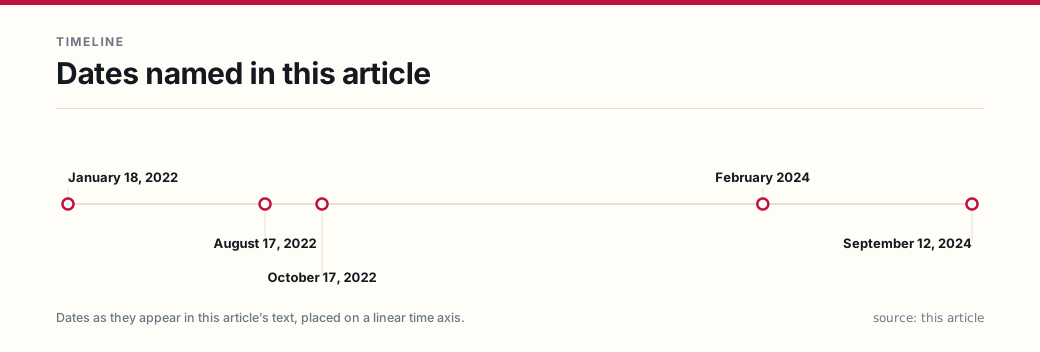
An over-the-counter (OTC) hearing aid is a hearing aid that the U.S. Food and Drug Administration (FDA) lets adults 18 and older buy without a prescription, a medical exam or a fitting appointment — provided the device meets the output, design and labeling limits in 21 CFR 800.30, and provided your hearing loss is perceived as mild to moderate. That last clause is the whole decision. The category has existed since October 17, 2022, when FDA’s final rule (87 Fed. Reg. 50698, published August 17, 2022) took effect, and the rule did something unusual for a medical device: it moved the qualifying test out of the clinic and onto the box.
So the purchase question is not “which brand.” It is four checks you can run before you pay — whether your symptoms fall inside the category, whether the loss is mild to moderate rather than severe, what the return line on the package actually says, and whether the device is a hearing aid or an amplifier wearing the word. This article works through those four, with the regulation and the federal data behind each. It covers the United States only, and it is general information, not medical advice.
What is an OTC hearing aid, legally?
FDA’s definition has four moving parts, and each one is a limit on what you are buying:
- Air conduction only. The device brings amplified sound into the ear canal. It is not implanted and involves no surgery.
- Adults 18 and older. Sale to or for anyone younger is prohibited (21 CFR 800.30(g)(1)).
- Perceived mild to moderate hearing loss. Not severe, not profound — and the word “perceived” is doing real work, because the rule does not require an audiogram to establish it.
- Self-adjustable. The device must let a lay user control it and customize the output through “tools, tests, or software,” and it must have a user-adjustable volume control (21 CFR 800.30(f)(5)).
Anything that fails those requirements is a prescription hearing aid — which the rule defines as simply “a hearing aid that is not an OTC hearing aid.” That definition matters commercially: a prescription aid can be fitted for any degree of loss and any age, and it is sold by an audiologist, an ENT physician or a licensed dispenser.
The category exists because the older path was expensive and gated. GAO reported in 2024 that “approximately 38 million American adults have reported some hearing loss, and an estimated 29 million U.S. adults could benefit from using hearing aids,” while NIDCD’s statistics page reports that among adults 70 and older whose hearing loss could benefit from hearing aids, “fewer than 1 in 3 (30%) has ever used them.” FTC staff, in a January 18, 2022 comment supporting the rule, described the pre-rule market as one where “approximately one third of the cost of providing typical hearing aid bundles is associated with the devices, while two thirds of the cost stem from the services bundled with the hearing aids.”
That two-thirds is what you are now allowed to decline. It is also what you give up.
Which nine symptoms mean stop shopping and see a doctor?
The rule requires the outside of the box to print a “Red flag” list, and it is the first thing worth reading — because every item on it is a reason the shelf is the wrong place to be:
- Your ear has a birth defect or an unusual shape, or was injured or deformed in an accident.
- You saw blood, pus or fluid coming out of your ear in the past 6 months.
- Your ear feels painful or uncomfortable.
- You have a lot of ear wax, or you think something could be in your ear.
- You get really dizzy, or have a feeling of spinning or swaying (vertigo).
- Your hearing changed suddenly in the past 6 months.
- Your hearing changes — it gets worse, then gets better again.
- You have worse hearing in one ear.
- You hear ringing or buzzing in only one ear.
FDA’s consumer page frames the reason in clinical terms: hearing loss “could be a sign of an easily treatable problem like built-up earwax or a more serious problem like a benign tumor on the hearing nerve.” None of the nine is a judgment call about how much you can afford. Each is a finding that needs an exam before amplification.
Note what the list implies for the most common buyer: symmetric, gradual, age-related loss with no pain, no drainage and no one-sided symptoms is exactly the profile the OTC category was built for.
Is your hearing loss actually mild to moderate?
The box is required to print the symptom list that defines the category. Five signals are the yes side:
- You have trouble hearing speech in noisy places.
- You find it hard to follow speech in groups.
- You have trouble hearing on the phone.
- Listening makes you tired.
- You need to turn up the volume on the TV or radio, and other people complain it’s too loud.
Two signals are the stop side, and they are the ones people skip:
- You can’t hear speech even if the room is quiet.
- You don’t hear loud sounds well — loud music, power tools, engines, other very noisy things.
The box’s own sentence for that second group is blunt: “If your hearing loss makes it hard to hear loud noises, this hearing aid may not be your best choice without help from a professional.” The reason is mechanical, not commercial. OTC output is capped by regulation: 111 dB SPL at any frequency, or 117 dB SPL if the device has activated input-controlled compression (21 CFR 800.30(d)). FDA states the consequence directly: OTC hearing aids “are limited in their maximum output and may not be adequate to treat more severe hearing losses.”
That cap is also the answer to “are OTC hearing aids as good as prescription ones?” For mild to moderate loss, the early evidence is favourable: GAO’s literature search identified 12 studies on patient access to treatment after the category opened, and the early research it reviewed suggested that OTC hearing aids “can be as effective as prescription hearing aids” — with the caveats that the research base is thin, four of those studies called for more high-quality independent research, and FDA has not studied the access effect itself. For severe loss, the comparison is not close, because the device is not permitted to deliver what that ear needs.
What on the box should you read before paying?
Once your symptoms fit the category, the decision moves to the packaging. Four items there carry almost all the risk.
| What to find on the box | Why it decides the purchase | The rule behind it |
|---|---|---|
| The return policy statement | No warranty is required, and no trial period is set. The return window is your only exit if the fit or the sound is wrong. | 21 CFR 800.30(c)(1)(i)(F) requires a “Notice of manufacturer’s return policy,” written as “a succinct, accurate statement of return policy or absence of return policy” |
| The words “OTC” and “hearing aid” | These marks are what separate a regulated device from an amplifier with a marketing problem. Sale is prohibited without them. | 21 CFR 800.30(c)(1)(iii) and (g)(2) |
| Whether a phone or remote is required | A device that needs a control platform you do not own is a device you cannot set up. This is a labeled fact, not a guess. | 21 CFR 800.30(c)(1)(v) |
| Battery type and count, or rechargeable | Decides running cost and whether the device survives a hearing-aid-user’s typical day. | 21 CFR 800.30(c)(1)(iv) |
The return line deserves more weight than shoppers give it, because it is the only consumer protection you can verify at the shelf. FDA says outright that its OTC hearing aid regulations “do not require manufacturers to provide a warranty,” and the labeling rule sets no minimum return window. GAO reported in 2024 that stakeholder groups recommended monitoring return policies and limits on gain as the market matures — that is regulator-speak for “this is the weak spot.”
Two practical readings follow. If the box states a return window, that window is your trial: test the device in the noisy room you actually complained about, not in your kitchen. If the box states the absence of a return policy, you are buying the device permanently, with nothing but the demo to go on — a bad trade at any price.
Three secondary checks take ten seconds each:
- A serial number on the device itself (required by 21 CFR 800.30(c)(3)(i)). Devices without one are hard to service and impossible to trace.
- The technical specification block in the manual, which must list OSPL90 (the maximum output), full-on gain, distortion, self-generated noise, latency and bandwidth (21 CFR 800.30(c)(4)). If a seller cannot produce those numbers, it is not describing a hearing aid.
- “FDA Registered” or “FDA Certified” badges. FDA’s own consumer page warns that “statements such as ‘FDA Registered’ and ‘FDA Certified’ medical devices, and the use of an FDA logo on an OTC hearing aid package labeling may be misleading.” Registration is a facility listing, not an approval.
One structural detail separates two product classes inside the category. Self-fitting OTC hearing aids — the ones that run a hearing test in an app and build a profile — go through FDA premarket review. GAO describes the split precisely: “Some OTC hearing aids—specifically, hearing aids with self-fitting technology—must go through premarket notification (known as a 510(k)),” while the rest, “those without self-fitting technology,” are “exempt from this requirement.” Software-only devices take a different door for the same reason: Apple’s Hearing Aid Feature was authorized through the De Novo pathway on September 12, 2024, for adults 18 and older with perceived mild to moderate loss, after a 118-subject study in which self-fitted users “achieved similar perceived benefit as subjects who received professional fitting of the same device.”
The point is not which form the paperwork takes. It is that a device making a fitting claim has had that claim reviewed, while a preset device has had its output and electroacoustic limits reviewed and nothing more.
What does the price include — and what does it not?
This is where the OTC decision is usually misread. The honest comparison is not “cheap device versus expensive device.” It is “device plus nothing” versus “device plus fitting, real-ear measurement, follow-up visits and a repair channel.”
FTC’s 2022 comment gives the shape of the old market: single hearing aids “ranging from approximately $1,600 for ‘entry level’ models to more than $2,000 for mid-level hearing aids and more than $2,600 for premium models.” FTC staff add that hearing aids are “commonly sold as part of a bundle that includes both the hearing aids and varying forms and amounts of follow-up services,” and that surveys have found “a large majority of audiologists” quote bundled rather than itemized prices — so professional time sits inside those numbers. The same comment cites a 2014 report in which VA volume-contract pricing averaged $369 per hearing aid against “$1,400–$2,200” retail for a similar device. Both figures are dated and neither is a 2026 price list; what has not changed is the arithmetic — a large share of the traditional quote pays for professional time, and OTC strips that line out rather than discounting the hardware.
Who pays:
- Original Medicare does not. Medicare’s coverage page states that Medicare “doesn’t cover hearing aids or exams for fitting hearing aids,” and “you pay all costs for non-covered services.”
- Medicare Advantage may. Some Part C plans “offer extra benefits that Original Medicare doesn’t cover - like vision, hearing, or dental.” Whether hearing aids are among them is plan-specific; check the plan’s evidence of coverage, not the brochure.
- Medicaid and private insurance vary by state and by plan. Coverage differs by state Medicaid program and by employer or marketplace plan, so the only reliable answer is your own program’s rules or your plan document.
- Tax-advantaged accounts generally work. IRS Publication 502 (2025) states: “You can include in medical expenses the cost of a hearing aid and batteries, repairs, and maintenance needed to operate it.” Hearing aids are therefore a Section 213(d) expense, which is the definition HSA and FSA rules use; confirm documentation with the account administrator.
One budget rule follows from the return-policy discussion: price the second purchase. If the first device does not fit comfortably enough to wear all day, a device you cannot return is money spent twice.
How does an OTC hearing aid compare with a prescription one?
| OTC hearing aid | Prescription hearing aid | |
|---|---|---|
| Who it is for | Adults 18+ with perceived mild to moderate loss | Any age, any degree of loss, based on the indications for use |
| How you get it | Store or online, no exam, no prescription, no fitting | Licensed professional; prescription; fitting and programming |
| Output | Capped at 111 dB SPL, or 117 dB with input-controlled compression | No OTC cap; set to the prescription |
| Who adjusts it | You, through the device’s tools, tests or software | The clinician programs it to your audiogram |
| What is included | The device and its labeling | Device plus evaluation, fitting, follow-up, often repairs |
| Warranty / trial | Not required by federal rule; stated return policy governs | Contract terms; state law may add requirements for prescription sales |
| Where state law stands | States may not require licensed-person involvement (21 CFR 800.30(h)(1)) | State licensing rules apply; FDA notes a licensed seller is required “in some states” |
The preemption point is the quiet revolution in the rule. Before it, FTC staff noted, many states restricted “the conditions under which hearing aids are sold or who can sell them,” including “requirements of a hearing evaluation or exam prior to sale.” For OTC devices, 21 CFR 800.30(h)(1) now bars state and local requirements that would impose “the supervision, prescription, or other order, involvement, or intervention of a licensed person.” That is why online purchase without a clinic visit is lawful in every state for a device that meets the OTC rule — and why you should be suspicious of any seller that claims state law requires an exam first.
Why is a personal sound amplifier not a hearing aid?
Because it is not regulated as a medical device at all. FDA draws the line by intended use: hearing aids “are intended to make up for impaired hearing,” while personal sound amplification products (PSAPs) “are intended for people with normal hearing to amplify sounds in certain situations, such as recreational activities like birdwatching or hunting.” FDA adds that PSAPs “are not alternatives to hearing aids,” and that because they are “regulated as consumer electronics and not medical devices, they may be more variable in terms of product quality.”
The regulatory consequence is concrete. PSAPs face “no applicable FDA requirements regarding conditions for sale” — no 18-and-over rule, no output cap, no required red-flag labeling, no return-policy disclosure. A cheap amplifier can therefore look like an OTC hearing aid in a listing and carry none of its obligations.
The FTC polices the advertising line between the two. In a 1996 consent order, Telebrands agreed to stop representing that its “WhisperXL” or a substantially similar product “is an effective hearing aid,” or that it “allows the user to hear a whisper from as far as 100 feet away,” and to stop making any other performance claim for such a device without competent and reliable scientific evidence. The date is old; the principle is current — calling an amplifier a hearing aid is a claim someone has already been ordered to stop making.
What is the buying sequence?
Run it in this order and most bad purchases eliminate themselves before checkout.
- Screen yourself against the nine red flags. Any hit: book an exam, do not shop.
- Apply the two stop signals. Can’t hear speech in a quiet room, or can’t hear loud sounds: OTC is the wrong category, whatever the price.
- Write down the three situations where you actually fail — restaurant, group call, TV. You will test against these, not against a demo.
- Read the return policy on the box before the price. No statement, or “no returns”: walk away. This is the only protection you can verify before paying.
- Check the control platform. If setup requires a phone you do not carry, the device is not for you regardless of its ratings.
- Prefer a self-fitting device if you want the fitting claim reviewed — self-fitting technology requires FDA premarket review, and the app-based hearing test is how the device learns your loss.
- Use HSA or FSA money if you have it, and keep the receipt: hearing aids and batteries are explicitly deductible medical expenses under IRS Publication 502.
- Give it the full return window, in the hard room. If it is still not usable at the deadline, return it and book an audiologist.
When should you stop and book an audiologist?
Three triggers, in ascending order of urgency:
- The device does not help enough. The label anticipates this: “If this hearing aid does not help you enough, ask for help from a hearing healthcare professional.”
- The loss does not match the profile — one-sided, sudden, fluctuating, or accompanied by pain, drainage or vertigo. These are the red flags, and they do not become less important because an OTC device is convenient.
- You want a number, not an impression. “Perceived” mild to moderate is the category’s own wording; an audiogram replaces perception with a measurement, and it is how you find out whether your loss sits inside the range OTC devices are built for.
The safety record so far is thin but not alarming. GAO reported that, as of February 2024, FDA “had received 12 reports of adverse events involving OTC hearing aids,” with examples including “pieces of the hearing aid broke off in the ear, allergic reactions to the device, worsening migraines while using the device,” and noted that passive surveillance likely undercounts. FTC, for its part, “has not taken any enforcement actions against hearing aid companies since the Rule took effect in October 2022” — as of that 2024 report — while monitoring the market.
Read together, those two facts describe a category that is regulated on paper, lightly tested in practice, and dependent on the buyer to run the checks the rule hands them. That is the trade the 2022 rule made: access in exchange for self-screening. The box is where the screening happens — which is also why our guide to how the OTC Drug Facts label is regulated makes a useful companion, and why the brand on the package still tells you less than the ingredient list, a pattern we covered in generic versus brand drugs.
FAQ
Can you buy OTC hearing aids without a hearing test? Yes, if you are 18 or older. The rule requires no exam, no prescription and no fitting, and 21 CFR 800.30(g) sets only two sale conditions: the buyer is 18 or older, and the device bears the required “OTC” and “hearing aid” statement. The test you are expected to run is the symptom list printed on the box.
Are OTC hearing aids as good as prescription hearing aids? For mild to moderate loss, early research says they can be comparable — GAO’s 2024 report reviewed 12 studies on access to treatment and described early research suggesting OTC hearing aids “can be as effective as prescription hearing aids.” For severe or profound loss they are not a substitute, because output is capped at 111 dB SPL and FDA states they “may not be adequate to treat more severe hearing losses.”
How much do OTC hearing aids cost compared with prescription ones? There is no federal price data and street prices move, so compare structurally. FTC staff reported in January 2022 that about one third of a typical bundle’s cost is the device and two thirds is bundled services — the share OTC removes — and cited pre-rule single-aid prices from roughly $1,600 for entry-level models to more than $2,600 for premium ones.
Do OTC hearing aids come with a warranty or trial period? Neither is required. FDA states its regulations “do not require manufacturers to provide a warranty,” and the rule sets no minimum return window. What is required is disclosure: the outside package must carry a “Notice of manufacturer’s return policy,” stated either as the policy or as its absence.
Does Medicare cover OTC hearing aids? No. Medicare “doesn’t cover hearing aids or exams for fitting hearing aids,” and you pay all costs for non-covered services. Some Medicare Advantage plans offer extra hearing benefits; coverage under Medicaid and private insurance varies by state and plan.
Can you pay with an HSA or FSA? Generally yes. IRS Publication 502 (2025) allows “the cost of a hearing aid and batteries, repairs, and maintenance needed to operate it” as a medical expense, and HSA and FSA rules follow that definition. Confirm documentation rules with the account administrator.
What is the difference between a PSAP and an OTC hearing aid? A PSAP is consumer electronics intended “for people with normal hearing to amplify sounds in certain situations,” and FDA says PSAPs “are not alternatives to hearing aids.” No output cap, no age condition and no required labeling apply to them, so a cheap amplifier can look like a hearing aid without meeting any of its requirements.
Can you buy one for a parent with severe hearing loss? You can buy it if they are 18 or older — the sale prohibition is about age, not severity — but the device is the wrong tool. If they cannot hear speech in a quiet room or cannot hear loud sounds, the label itself says this hearing aid “may not be your best choice without help from a professional.”
Frequently asked questions
- Can you buy OTC hearing aids without a hearing test?
- Yes, if you are 18 or older. The FDA rule that took effect October 17, 2022 requires no medical exam, no prescription and no fitting by an audiologist, and 21 CFR 800.30(g) sets only two conditions for sale: the buyer must be 18 or older, and the device must carry the required 'OTC' and 'hearing aid' statement. The test you are expected to run is printed on the box — the symptom list for perceived mild to moderate hearing loss — not administered by a clinician.
- Are OTC hearing aids as good as prescription hearing aids?
- For mild to moderate loss, early research says they can be comparable; for anything else they are not a substitute. GAO's 2024 report reviewed 12 studies on access to treatment after the category opened and described early research suggesting that OTC hearing aids 'can be as effective as prescription hearing aids' for people with mild to moderate hearing loss. Above that range the FDA's own limit binds: OTC output is capped at 111 dB SPL, and FDA states that OTC hearing aids 'are limited in their maximum output and may not be adequate to treat more severe hearing losses.'
- How much do OTC hearing aids cost compared with prescription ones?
- There is no federal price data, and street prices move, so compare the two offers structurally instead. In its January 18, 2022 comment to FDA, FTC staff reported that 'approximately one third of the cost of providing typical hearing aid bundles is associated with the devices, while two thirds of the cost stem from the services bundled with the hearing aids' — the share OTC removes. The same comment, citing a 2014 report, put VA volume-contract pricing at an average of $369 per hearing aid against an open-market retail price of $1,400 to $2,200 for a similar device.
- Do OTC hearing aids come with a warranty or a trial period?
- No federal rule requires either one. FDA states plainly that its OTC hearing aid regulations 'do not require manufacturers to provide a warranty,' and the labeling rule sets no minimum return window. What the rule does require is disclosure: 21 CFR 800.30(c)(1)(i)(F) makes the outside package carry a 'Notice of manufacturer's return policy,' written as 'a succinct, accurate statement of return policy or absence of return policy.' The return line on the box is therefore the only trial you are guaranteed.
- Does Medicare cover OTC hearing aids?
- No. Medicare's coverage page states that Medicare 'doesn't cover hearing aids or exams for fitting hearing aids,' and that you pay all costs for non-covered services. Some Medicare Advantage (Part C) plans offer extra benefits that Original Medicare does not, so the answer for a specific plan is in that plan's evidence of coverage. Coverage under Medicaid and private insurance varies by state and by plan.
- Can you pay for OTC hearing aids with an HSA or FSA?
- Generally yes, because hearing aids are a Section 213(d) medical expense. IRS Publication 502 (2025) says: 'You can include in medical expenses the cost of a hearing aid and batteries, repairs, and maintenance needed to operate it.' Health savings account and flexible spending account rules follow the same definition, but the account administrator decides how a given purchase is documented, so confirm the claim rules with the plan before you buy.
- What is the difference between a PSAP and an OTC hearing aid?
- A personal sound amplification product (PSAP) is regulated as consumer electronics, not as a medical device. FDA describes PSAPs as 'intended for people with normal hearing to amplify sounds in certain situations, such as recreational activities like birdwatching or hunting,' and says they 'are not alternatives to hearing aids.' Because PSAPs are not medical devices, the OTC hearing aid rule — the output cap, the 18-and-over sale condition and the required labeling — does not apply to them.
- Can you buy an OTC hearing aid for a parent with severe hearing loss?
- You can buy one only if that person is 18 or older, and the device is still the wrong tool if the loss is severe or profound. The sale prohibition in 21 CFR 800.30(g)(1) is about age, not severity; the severity limit comes from the output cap. If the person cannot hear speech even in a quiet room, or does not hear loud sounds well, the FDA box label itself says this hearing aid 'may not be your best choice without help from a professional.'
Sources
Each source is a primary or official reference, checked before publication. Links open the original.
- U.S. Food and Drug Administration — final rule, 'Medical Devices; Ear, Nose, and Throat Devices; Establishing Over-the-Counter Hearing Aids,' 87 Fed. Reg. 50698, published August 17, 2022, effective October 17, 2022; compliance date April 14, 2023 for hearing aids legally offered for sale before that date; Docket No. FDA-2021-N-0555 (federalregister.gov/documents/2022/08/17/2022-17230/medical-devices-ear-nose-and-throat-devices-establishing-over-the-counter-hearing-aids retrieved November 14, 2026)
- 21 CFR 800.30 — 'Hearing aids,' subpart B, current text: (a) scope (air-conduction hearing aids that satisfy paragraphs (c) through (f) are 'available' over the counter); (b) definitions of OTC hearing aid, prescription hearing aid, licensed person; (c)(1)(i)(F) outside package to bear 'Notice of manufacturer's return policy' in the form 'succinct, accurate statement of return policy or absence of return policy'; (c)(1)(iii) principal display panel to bear 'OTC' and 'hearing aid'; (c)(1)(iv)–(v) battery type/number and whether a mobile device or other non-included control platform is required; (c)(3)(i) serial number on the device; (c)(4) technical specifications including OSPL90; (d)(1) output limit 111 dB SPL at any frequency, (d)(2) 117 dB SPL with activated input-controlled compression, measured with a 90 dB SPL pure-tone input at full gain; (e)(1) total harmonic distortion plus noise not to exceed 5 percent; (e)(2) self-generated noise not to exceed 32 dBA; (e)(3) latency not to exceed 15 ms; (e)(4) lower cutoff 250 Hz or below and upper cutoff 5 kHz or above; (f)(1) insertion limited to at least 10 mm from the tympanic membrane; (f)(5) user-adjustable volume control; (g)(1) sale to or for a person younger than 18 prohibited; (g)(2) sale prohibited unless labeling bears the statement of OTC availability; (h)(1) state and local requirements for the supervision, prescription or other involvement of a licensed person are preempted for OTC hearing aids (ecfr.gov/current/title-21/chapter-I/subchapter-H/part-800/subpart-B/section-800.30 retrieved November 14, 2026)
- U.S. Food and Drug Administration — 'OTC Hearing Aids: What You Should Know' (consumer/medical-device page): the category 'went into effect on October 17, 2022'; intended 'for use by people 18 years of age and older to help with perceived mild to moderate hearing loss'; available 'without the supervision, involvement, or prescription of a licensed health care professional'; 'OTC hearing aids are limited in their maximum output and may not be adequate to treat more severe hearing losses'; required outside-box labeling includes the under-18 warning, the five symptoms of perceived mild to moderate loss, advice on seeking professional services, the 'Red flag' conditions list, contact information and the manufacturer's return policy; 'the FDA's OTC hearing aid regulations do not require manufacturers to provide a warranty'; warning that statements such as 'FDA Registered' and 'FDA Certified' 'may be misleading' (fda.gov/medical-devices/hearing-aids/otc-hearing-aids-what-you-should-know retrieved November 14, 2026)
- U.S. Food and Drug Administration — 'Hearing Aids and Personal Sound Amplification Products: What to Know' (consumer update): PSAPs 'are not alternatives to hearing aids'; PSAPs 'are intended for people with normal hearing to amplify sounds in certain situations, such as recreational activities like birdwatching or hunting'; 'Because such PSAPs are regulated as consumer electronics and not medical devices, they may be more variable in terms of product quality'; conditions for OTC sale are 'Purchaser must be 18 years or older; No medical exam; No prescription; No fitting by audiologist; No need for licensed seller'; prescription hearing aids require 'a prescription needed' and 'must purchase from licensed seller in some states'; definitional contrast of mild versus moderate loss (fda.gov/consumers/consumer-updates/hearing-aids-and-personal-sound-amplification-products-what-know retrieved November 14, 2026)
- U.S. Food and Drug Administration — press announcement, September 12, 2024, 'FDA Authorizes First Over-the-Counter Hearing Aid Software': authorization of the Hearing Aid Feature for compatible Apple AirPods Pro; 'intended to amplify sounds for individuals 18 years or older with perceived mild to moderate hearing impairment'; 'a software-only mobile medical application'; 'utilizes a self-fitting strategy, and users may adjust it to meet their hearing needs without the assistance of a hearing professional'; clinical study of 118 subjects with perceived mild to moderate hearing loss at multiple U.S. sites, in which self-fitted users 'achieved similar perceived benefit as subjects who received professional fitting of the same device'; reviewed under the De Novo pathway (fda.gov/news-events/press-announcements/fda-authorizes-first-over-counter-hearing-aid-software retrieved November 14, 2026)
- U.S. Government Accountability Office — GAO-24-106854, 'Over-the-Counter Hearing Aids: Information on the New Medical Device Category,' published May 7, 2024, publicly released June 6, 2024: 'Approximately 38 million American adults have reported some hearing loss, and an estimated 29 million U.S. adults could benefit from using hearing aids'; OTC devices 'use the same fundamental scientific technology as prescription air-conduction hearing aids'; 'Some OTC hearing aids—specifically, hearing aids with self-fitting technology—must go through premarket notification (known as a 510(k))'; 'All other lower-risk OTC hearing aids (i.e., those without self-fitting technology) are exempt from this requirement'; GAO's literature search 'identified 12 relevant research studies' on patient access to hearing loss treatment after October 2022, and 'early research has suggested that OTC hearing aids can be as effective as prescription hearing aids,' while four studies 'noted the lack of research on OTC hearing aids'; 'As of February 2024, FDA officials reported the agency had received 12 reports of adverse events involving OTC hearing aids,' examples including 'pieces of the hearing aid broke off in the ear, allergic reactions to the device, worsening migraines while using the device'; 'FTC has not taken any enforcement actions against hearing aid companies since the Rule took effect in October 2022 but is monitoring the emerging marketplace'; stakeholder groups recommended monitoring 'children's use of OTC hearing aids, return policies, and limits on gain' (gao.gov/products/gao-24-106854 report PDF at gao.gov/assets/gao-24-106854.pdf retrieved November 14, 2026)
- Federal Trade Commission staff — comment to FDA, Docket No. FDA-2021-N-0555, January 18, 2022, filed by the Office of Policy Planning, Bureau of Economics and Bureau of Competition: 'Recent reports note prices for a single hearing aid ranging from approximately $1,600 for "entry level" models to more than $2,000 for mid-level hearing aids and more than $2,600 for premium models'; '[a]ccording to one report published in early 2014, the VA paid an average of $369 per hearing aid, while one vendor's retail price for a similar hearing aid in the open market was $1,400–$2,200'; 'approximately one third of the cost of providing typical hearing aid bundles is associated with the devices, while two thirds of the cost stem from the services bundled with the hearing aids'; many states restrict 'the conditions under which hearing aids are sold or who can sell them,' including 'requirements of a hearing evaluation or exam prior to sale' (ftc.gov, docket file v220000staffcommentotchearingaids2.pdf, retrieved November 14, 2026)
- Federal Trade Commission — press release, January 2022, 'FTC Comment to Food and Drug Administration Supports Agency's Proposed Rule on Establishing Over-the-Counter Hearing Aids': barriers 'may include more than just prices for hearing aids themselves'; 'Restricted channels of distribution often limit consumer choice to, for example, expensive bundles of hearing aids and extended services that many consumers may not want or be likely to use'; 'a lack of pricing transparency makes it difficult for consumers to make "apples to apples" comparisons'; Commission vote 4-0 (ftc.gov, retrieved November 14, 2026)
- National Institute on Deafness and Other Communication Disorders (NIDCD) — 'Quick Statistics About Hearing, Balance, & Dizziness,' page dated September 20, 2024: 'Approximately 15% of American adults (37.5 million) ages 18 and over report some trouble hearing'; 'About 28.8 million U.S. adults could benefit from using hearing aids'; 'Among adults ages 70 and older with hearing loss who could benefit from hearing aids, fewer than 1 in 3 (30%) has ever used them'; 'Even fewer adults ages 20-69 (approximately 16%) who could benefit from wearing hearing aids have ever used them'; '22% of those ages 65-74 and 55% of those who are 75 and older have disabling hearing loss' (nidcd.nih.gov/health/statistics/quick-statistics-hearing retrieved November 14, 2026)
- Centers for Medicare & Medicaid Services — Medicare.gov coverage page, 'Hearing aids': 'Medicare doesn't cover hearing aids or exams for fitting hearing aids'; 'You pay all costs for non-covered services, including hearing aids and exams'; 'Some Medicare Advantage Plans (Part C) offer extra benefits that Original Medicare doesn't cover - like vision, hearing, or dental. Contact the plan for more information' (medicare.gov/coverage/hearing-aids retrieved November 14, 2026)
- Internal Revenue Service — Publication 502 (2025), Medical and Dental Expenses, page 8: 'Hearing Aids — You can include in medical expenses the cost of a hearing aid and batteries, repairs, and maintenance needed to operate it.' (irs.gov/publications/p502 PDF revision dated February 2026, retrieved November 14, 2026)
- Federal Trade Commission — 'Agreement Containing Consent Order to Cease and Desist,' In the Matter of Telebrands Corp. and Ajit Khubani, September 1996 (FTC file 932-3297): paragraph V orders respondents to cease and desist from representing that the 'WhisperXL' or a substantially similar product 'is a major breakthrough in sound enhancement technology,' 'is an effective hearing aid,' or 'allows the user to hear a whisper from as far as 100 feet away' — an outright prohibition, subject only to a carve-out for products that have received FDA premarket approval or clearance; paragraph VI separately bars representing the performance of 'any hearing aid or other sound amplification device intended to be worn or carried by the user' 'unless such representation is true and, at the time of making such representation, respondents possess and rely upon competent and reliable evidence' (ftc.gov/sites/default/files/documents/cases/1996/09/9323297a.pdf retrieved November 14, 2026)